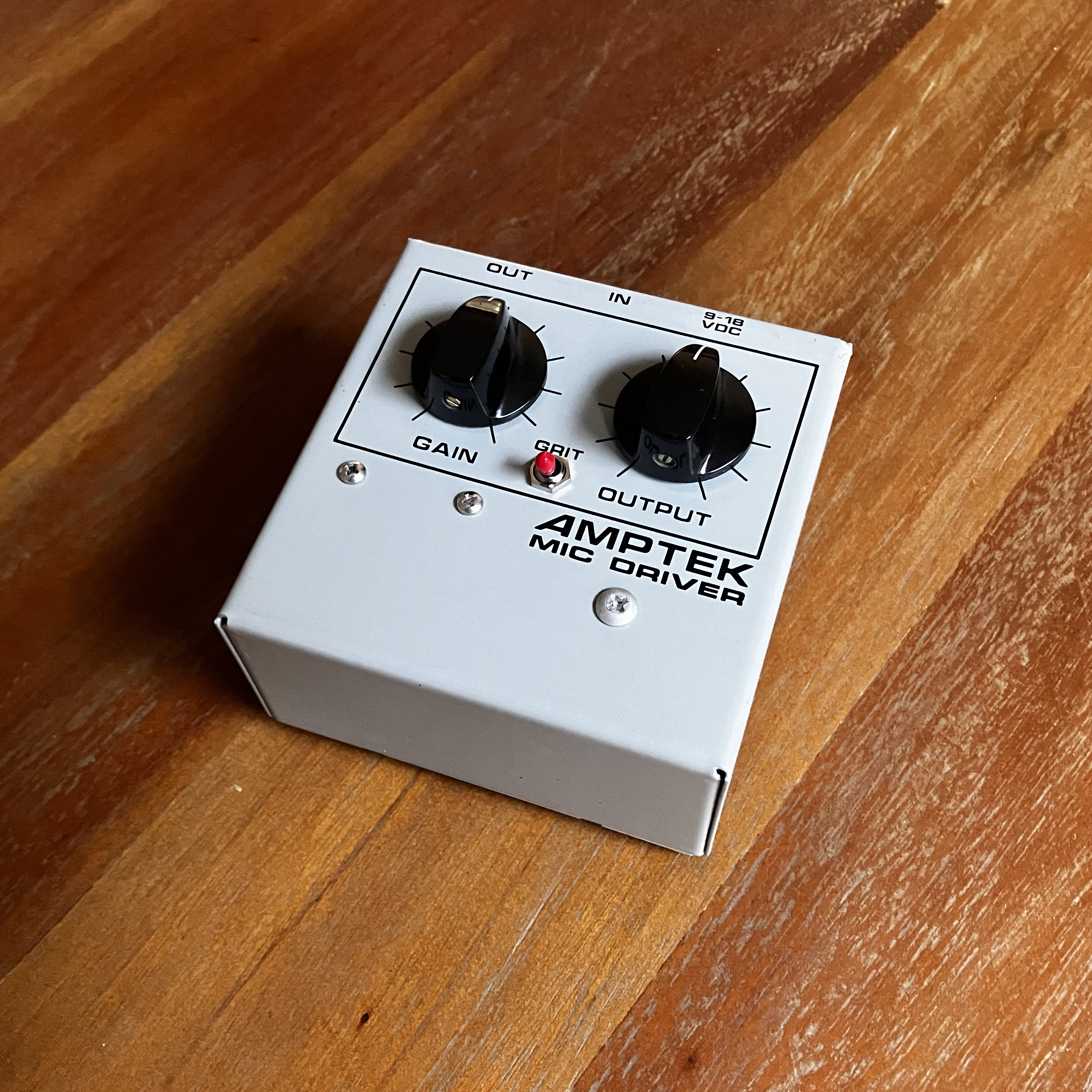
Germanium Mic Preamp / Saturator / Inline Booster
Providing engineers and performers alike the ability to drive mic’d signals through a 1960s style Class-A preamp, the Mic Driver series of preamps are unique pedal-sized germanium preamps. Featuring an all-vintage transformer and transistor based signal path, mic’d signals generate pleasing vintage analog tones ranging from smooth and warm to heavily saturated harmonic distortion.

THEORY OF OPERATION
Like vintage tube amps and germanium pedals coveted for their ability to provide musicians warm harmonic coloration to fuzzed out saturation, the Mic Driver provides users the same ability for microphone signals.
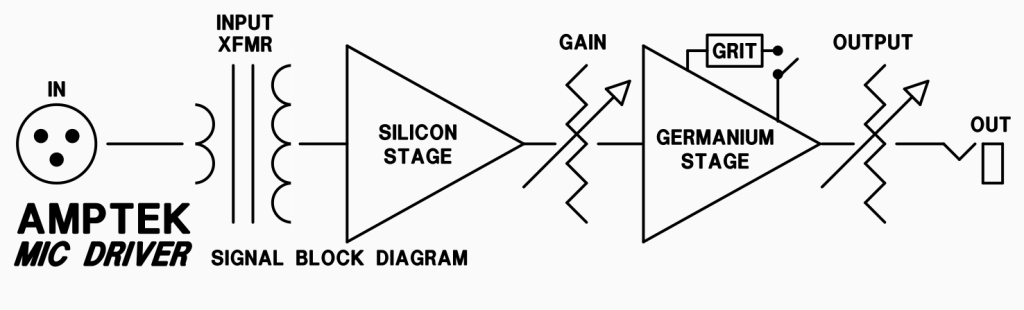
Signal flow consists of two gain stages. Initial preamplification consists of a high ratio step-up transformer into low-noise silicon transistors. An interstage GAIN control then adjusts the level into the germanium based output stage. Higher levels of gain generate increasing amounts of smooth asymmetric clipping, allowing a range of coloration options. Following high levels generated while clipping, OUTPUT control allows users to reduce levels into following equipment, be it pedals, a DI, an interface or more. The GRIT toggle increases the gain of the output stage, giving users the ability push levels through germanium to their liking when paired with the Gain control.
SPECIFICATIONS
PSU: 9 – 18 VDC (Center Negative)
*Higher voltages yield higher headroom.
**A low noise isolated supply is recommended
Transformers:
70s/80s Shure Input Transformer
Transistors:
Rotating stock of New Old Stock 50s/60s Sylvania, RCA, Raytheon, GE and Tung-Sol Germanium
Enclosure:
Steel
Connectors:
Switchcraft 1/4″, Neutrik XLR
Dimensions:
4.25″x4″x2.5″(LxWxH)
What’s the difference between models?
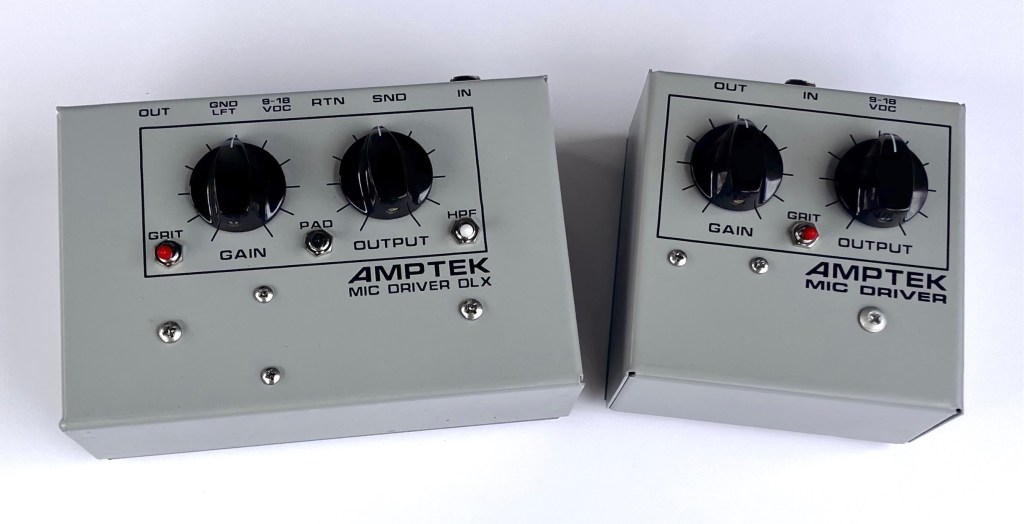
Observing the front panel controls, the most obvious difference between models is the inclusion of a toggleable PAD and HPF (high pass filter). The input pad is a standard -20dB pad for reducing mic levels that are too hot for the input stage (unless that is part of the desired sound!) while the HPF is a smooth low end rolloff that helps reduce proximity effect and low end pickup/rumble.
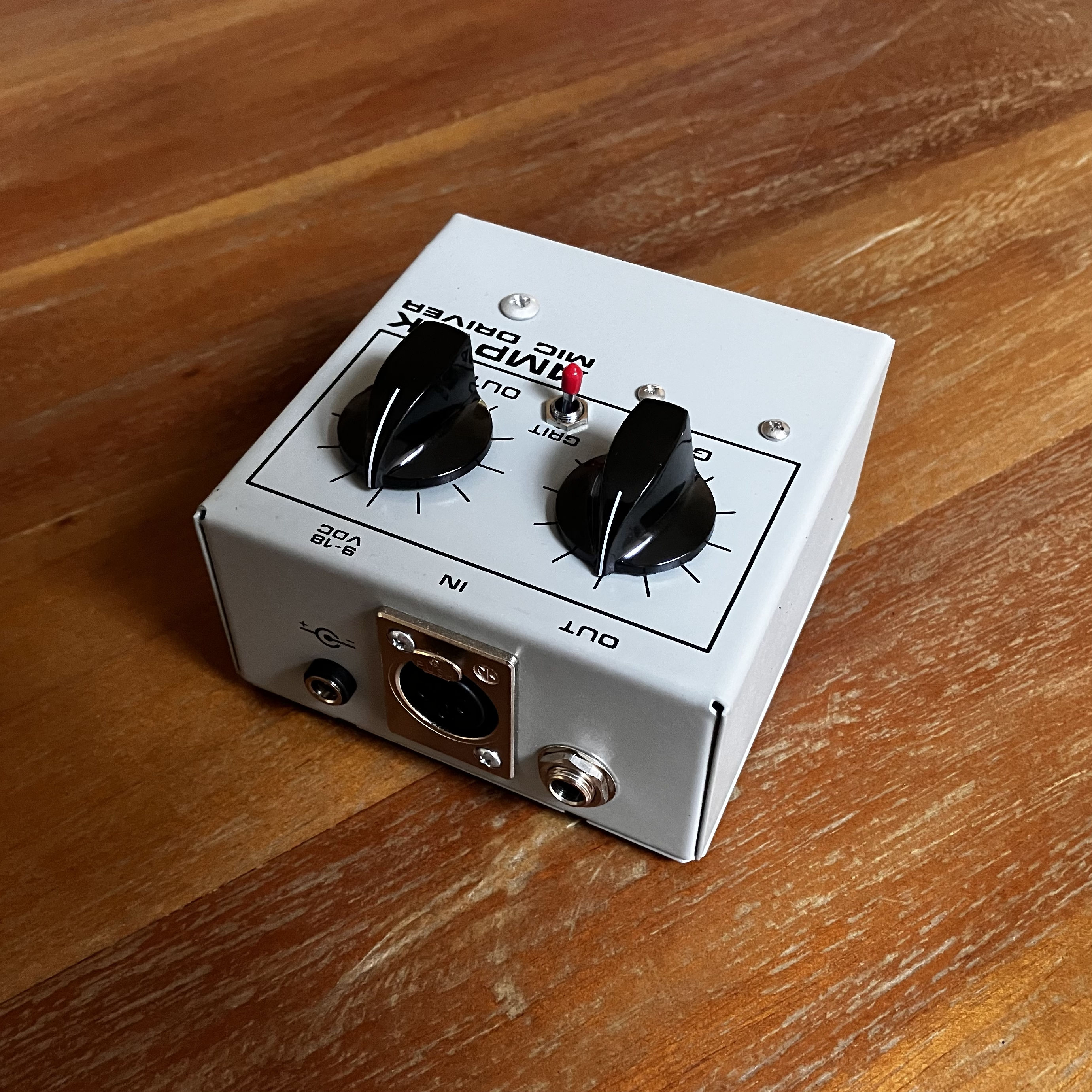
Glancing at rear I/O connections is where more differences are revealed. Following the output level control – depending on model – users are presented with different routing options. The base model Mic Driver has a ¼” unbalanced output which users can plug into line inputs, pedals, and so forth while the DLX provides substantially more options.The XLR OUT is a transformer balanced, mic level output, much like a DI. The SEND jack can be used as either a 1/4″ unbalanced output (as found in the standard Mic Driver model) or can be used as the start of an effects loop. The FX loop is wired in a half-normalled configuration such that users can send the signal to external equipment without interrupting the dry mic level output. Using the RETURN jack at the end of a pedal chain breaks the normal and the affected signal is then converted and output as balanced mic level.
A Ground/Lift switch is included for the balanced output, disconnecting or connecting the shield from the chassis on the output for alleviating potential ground loops. With this configuration, in a pinch, users can additionally use the preamp for microphones while taking the output from the send jack, while using the return for a totally different source as a separate passive DI.